
The Trilogy of Healthy Lifestyle – Move that body!
Lifestyle management of diabetes includes three things: food, stress and activity. Jayne Lehmann looks at the practical ways you can help people with type 1 and type 2 diabetes to move more. Healthy eating and stress management strategies will be covered in coming editions of diabetes coalface.
Aussie, Aussie, Aussie … Oi! Oi! Oi!
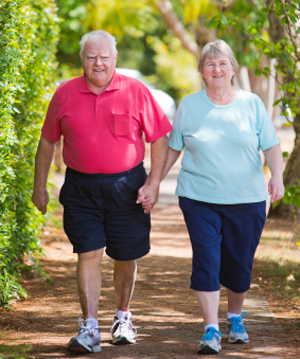
Keeping active helps prevent and treat diabetes.
That’s the cry of the nation as we cheer on the latest Australian sporting heroes as they inspire pride in our nation’s sporting prowess. Try to get the same people out of their lounge chair for a walk and you elicit a less enthusiastic response!
Almost 70% of Australians 15 years or older were either sedentary or doing low rates of exercise in the week prior to the 2010-11 Australian Health Survey. Around the same time the Australian Institute of Health and Welfare identified over sixty percent of Australians were either overweight or obese. This lack of exercise and increasing girth drives the rates of type 2 diabetes in Australia.
People with type 1 and type 2 diabetes are encouraged to include at least thirty minutes of moderate activity on most days. Exercise burns calories to lose or maintain weight. It also improves the action of insulin at the insulin receptor site to help manage blood glucose levels. Then there are the added benefits to elevated lipid profiles, blood pressure, stress and improved bone density, etc. With so many benefits why is it so hard to get people up and moving for better health?
We shouldn’t be that surprised given we have been de-conditioned and de-motivated to move. Technology stops us from ‘having’ to be actively involved in our day. Cars take us to the shop, school and work … homes are bursting with devices designed to help us cook, clean and entertain without the need to be physically challenged. We send an email instead of walking to the letterbox, shop on-line instead of walking around the shops and a workday is more likely to be spent sitting rather than being physically active.
A vicious cycle is created … as we have less need to move, it becomes harder to move due to weight increase and muscle strength decrease. Before you know it, a range of other technologies are needed to make up and monitor the activity the other devices have stripped from our lives!
What is out there to help people move more and sit less?
 There has been some good research showing that if we stand more and sit less activity levels increase and leg muscles maintain strength. Blue Earth have a great website, Move more, sit less, dedicated to getting people moving more for their health. The website has loads of information on why it is good to keep your body on the move and examples of strategies and resources to help you stay up-standing. You will find…
Active ideas for workplaces, families and schools.
The ‘move more’ message applies equally to people with type 1 and type 2 diabetes. It’s a good idea to use the following tips to help to stay on track with your activity …
- Book a review with the doctor before increasing activity or if blood glucose levels are high:
- Levels consistently above 15 mmol/L are likely to increase further. High glucose levels result from a lack of insulin. Physical activity increases need for glucose to fuel muscles so the body mobilises stored glucose via the liver … increasing glucose levels. However, without more insulin the body can’t utilise it so levels remain high.
- Increasing activity can make blood glucose levels go up – they often come back down an hour or two after they finish the activity.
- Moderate activity continues to have an effect on the insulin receptor sites for 12-16 hours. Including moderate activity each day brings this effect into play each day for ongoing management of glucose levels.
- Those on sulphonylurea tablets or insulin need to watch out for hypoglycaemia later in the day and during exercise. Keep hypo treatments available … if on insulin, the dose can be changed to prevent ongoing low levels – discuss with GP or diabetes educator.
- Wear good fitting shoes and check feet after wearing them for blisters, corns and other potential foot issues that could cause harm to the feet.
- Pedometers or other activity monitors can help to motivate people to move more.
- Include in the log book when and how long they exercise for interpretation of blood glucose levels later.
- Refer people finding it hard to get moving to a Credentialled Diabetes Educator for some targeted input to enable people to put this positive part of their diabetes care into action.
Have you noticed I’m avoiding the word exercise in this article? It sounds like a lot of hard work to exercise, compared to being more active, setting people up for a more achievable approach to this area of care.
For Health Professionals: Talk to people with diabetes you see in the general practice, community pharmacy, health service or home visits about increasing their level of activity by moving more and sitting less. Not only does it help manage a number of health parameters people need to address when they have diabetes … it’s also a good return on time invested!