
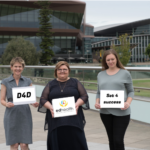
Disability organisations can no longer afford to see health as someone else’s responsibility.
For many years, disability and health have operated as two separate systems. Disability organisations have understandably focused on participation, independence and daily support, while health has been seen as the responsibility of hospitals, GPs and allied health professionals. But the reality is very different. Every day, disability support workers are helping people take medications, monitor…
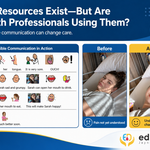
The Resources Exist—But Are Health Professionals Using Them?
Written by Jayne Lehmann, Director, EdHealth Australia Health professionals often say they want to provide equitable, person-centred care. Yet when professional development competes with busy clinics, growing caseloads and administrative demands, education about intellectual disability can be pushed aside. It may be seen as relevant only to disability specialists or to a small group of…

Why diabetes support in the NDIS requires more than training
For too long, diabetes support within the disability sector has been approached as a clinical task to be delegated, rather than a complex support need to be understood. As a result, people with intellectual disability who live with diabetes often experience poorer health outcomes, avoidable hospital admissions, distressing health events, and support systems that struggle…
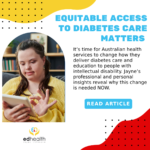
Why Equitable Access to Diabetes Care Matters for People with Intellectual Disability
By Jayne Lehmann, Director, EdHealth Australia People with intellectual disability are far more likely to experience barriers to diabetes education, support, and healthcare—yet they often have greater health needs and face poorer outcomes than the general population. While diabetes management depends on access to clear information, ongoing education, and appropriate support, many healthcare systems are…
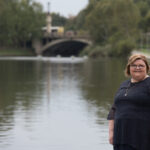
Addressing Health Inequities for People with Intellectual Disabilities: A Personal and Professional Journey
“Gaining deeper insights into verbal and non-verbal communication shared in empathetic care, assures truly person centred care…no matter to whom they are providing healthcare.”


Are private practice Credentialled Diabetes Educators on the endangered list?
Jayne Lehmann BN(Ed) DipAppSc(Nsg RN CDE The Medicare funded Chronic Disease Management program has provided reimbursement for people with diabetes to see a Credentialled Diabetes Educator (CDE) in primary care since 2004. Introduced as an eligible service in the Chronic Disease Management program, given the 1.4million people living with diabetes in Australia, you would expect…

We need YOU to act on health literacy
How many of you give people a form or handout … or two or three … about their health and the conditions they need to manage? I’d say all of you! Forms are a necessary part of many of our days and handouts provide an easy way to share information, reinforce what we have been…

Book Review: Yoga for Diabetes by Rachel Zinman
In the diabetes world there are people who inspire with their unique diabetes journey and Rachel Zinman can add her name to this special list. ‘Yoga for Diabetes’ was written by Rachel to share her 30 plus year journey with yoga, a central tenet of her life. Rachel has used yoga and Ayurveda to help…

Insulin pens … A matter of environment impact
In Australia, the majority of people give their insulin using disposable pens, which, once empty, contributes a significant amount of rubbish to landfill. Is it time the diabetes community improves its environmental report card by getting more people with diabetes to switch to a more environmentally friendly insulin delivery device? The three insulin companies, Lily,…